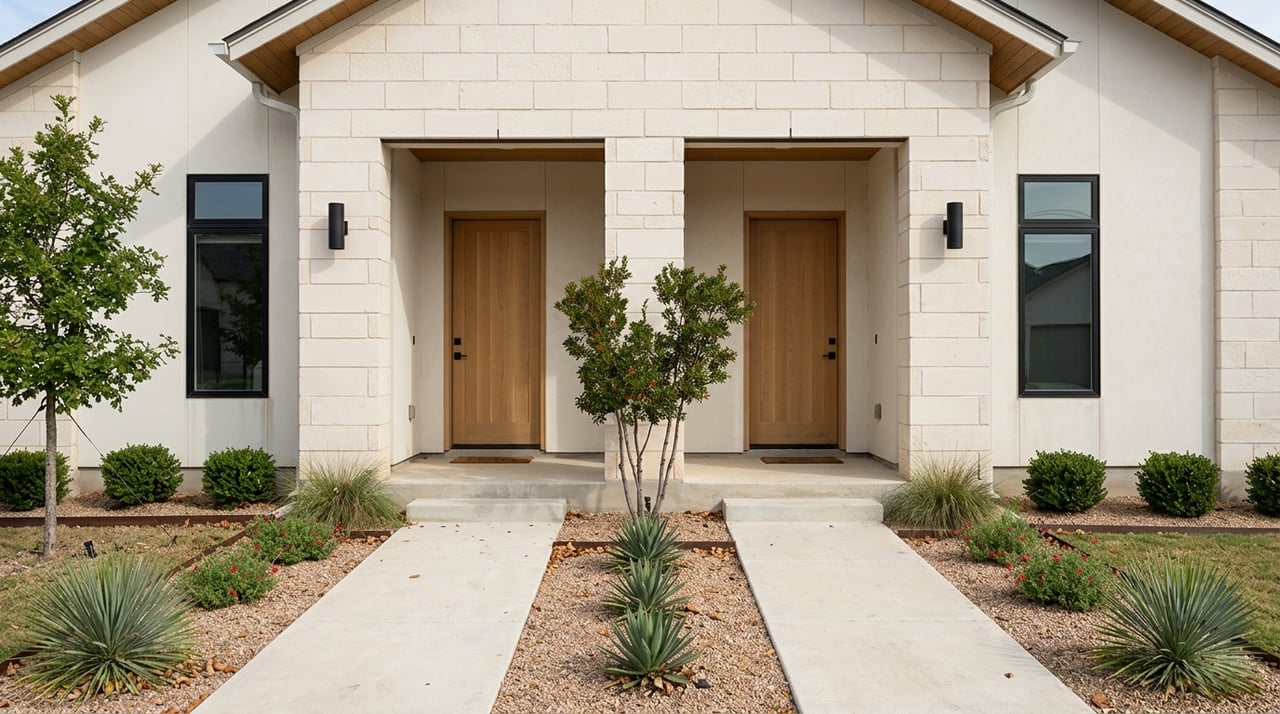
Thinking about buying in Cedar Park but want the payment to work harder for you? House hacking can be one of the most practical ways to lower your housing cost, build landlord experience, and make a purchase feel more sustainable in a higher-price market. If you are exploring Cedar Park with both lifestyle and numbers in mind, this guide will walk you through realistic house hacking ideas, what the local market supports, and what to verify before you count on rental income. Let’s dive in.
Why house hacking matters in Cedar Park
Cedar Park is not a bargain market, so strategy matters. As of May 31, 2026, the average home value in Cedar Park was $474,678, while Zillow’s Cedar Park rent index was $1,690.
That gap is exactly why many buyers look for ways to offset ownership costs. House hacking can help you buy a home to live in while creating income from a room, an accessory space, or another unit, depending on the property and the loan program.
Cedar Park also has a mix of housing types that make this conversation relevant. Apartments.com notes the city includes apartment communities, townhomes, and garden-style rentals, and it also reports that Cedar Park has more homeowners than renters.
House hacking ideas for Cedar Park buyers
Not every strategy fits every property, and not every property fits every loan. In Cedar Park, the most realistic house hacking setups usually fall into three buckets.
Rent out bedrooms in a single-family home
This is often the simplest entry point. You buy a primary residence, live in it, and rent one or more bedrooms to help cover the mortgage.
Current active room listings in Cedar Park show a rough range of $650 to $1,100 per month. Some listings include private baths, and some include utilities, which can affect what renters are willing to pay.
For many buyers, this setup is attractive because it does not require buying a multifamily property. It may also let you ease into property management without taking on a larger building.
There is also an important Texas homestead angle here. Texas law says a qualified residence homestead does not lose its homestead character if part of it is rented to another person, although the exemption does not apply to the rented portion.
Add or buy a home with a casita or ADU-style space
Some buyers want more separation than a shared hallway and kitchen can offer. In that case, a home with an attached suite, casita, or accessory dwelling setup may be worth a closer look.
In Cedar Park, you should not assume that a garage conversion, detached structure, or added suite is automatically a legal rental unit. The city says a permit is required for construction that physically changes or adds structures to the property, including accessory buildings and structures such as dwellings.
The city’s accessory-structure checklist calls for details such as:
- Site plan
- Setbacks and property lines
- Foundation or anchoring details
- Utility details
- Elevations
- Required parking for dwelling units
Cedar Park’s zoning map includes districts such as MR, MU, SU, SR, and UR, so the exact parcel zoning matters. Before you rely on projected rent from a suite or ADU-style space, you need to confirm zoning, permit status, and building requirements with the city.
Buy a duplex, triplex, or fourplex
For buyers who want the most traditional house hacking model, a small multifamily property can be a strong option. You live in one unit and rent the others.
This can create clearer income separation than room rentals. It may also be easier to underwrite than informal arrangements, depending on the property and loan program.
Cedar Park’s zoning map includes MR, or Multifamily Residential, and MU, or Mixed Use, which tells you small multifamily exists in the local land-use picture. That said, these properties are not available on every parcel, and current listing supply appears thinner than standard single-family inventory.
Recent Cedar Park multifamily rental examples show 2-bedroom, 2-bath units around $1,250 to $1,295 per month. Those figures can help you frame a back-of-the-envelope estimate, but any serious purchase should be underwritten using property-specific rent support.
What Cedar Park rents suggest
When you are evaluating a house hack, rent reality matters more than theory. Cedar Park’s broader rental market gives you useful benchmarks.
Apartments.com’s July 2026 guide shows advertised apartment rents around:
- $991 for a studio
- $1,226 for a one-bedroom
- $1,612 for a two-bedroom
- $1,909 for a three-bedroom
The same guide shows average rents of about:
- $2,708 for houses
- $2,341 for condos
- $1,864 for townhomes
These numbers do not tell you what your specific property will rent for, but they do help you pressure-test your assumptions. If your projected room rent, attached suite rent, or extra-unit rent is far above local market patterns, that is a sign to slow down and verify the numbers.
How lenders may view house hack income
One of the biggest buyer mistakes is assuming every dollar of future rent counts the same way in underwriting. It does not.
Room rental income is program-specific
If you plan to rent bedrooms in the home you occupy, lender treatment can vary quite a bit. FHA’s 2025 boarder-income update allows documented income from people renting space inside the borrower’s home with a 12-month history, including at least 9 of the most recent 12 months, and caps that income at 30% of the borrower’s total monthly effective income.
FHA also allows documentation such as bank statements, canceled checks, and deposit slips. Fannie Mae’s boarder-income rules are generally narrower and typically require proof of shared residency plus 12 months of receipts, with HomeReady as the main exception noted in the research.
ADU or suite income has limits
For one-unit primary residences, Fannie Mae allows rental income from one existing ADU and caps qualifying ADU income at 30% of total qualifying income. HUD says FHA can also use ADU rent when market rent is supported by the appraisal and rent schedule.
That distinction matters. A space may feel rentable in real life, but if it is not recognized the right way by the loan program or the appraisal, the income may not help you qualify as much as expected.
Small multifamily often has clearer income treatment
If you buy a duplex, triplex, or fourplex as your primary residence, the income from the non-owner-occupied units may be used to help support qualification under certain programs. FHA’s single-family program includes 1-4 unit owner-occupied properties, and HUD’s 2025 guidance confirms FHA allows 2-4 unit properties and 1-4 unit homes with ADUs.
Freddie Mac’s 2-4 unit primary-residence program also allows rental income from the other units to be added to income. Fannie Mae says the income approach is required in the valuation of 2-4 unit properties.
Expect income haircuts and reserve requirements
Even when rental income is allowed, lenders may not use 100% of the projected amount. FHA guidance says that if a borrower has limited or no rental history, lenders use 75% of the lesser of appraiser market rent or lease rent in several scenarios.
FHA also requires reserves of one month PITI for one- to two-unit properties and three months PITI for three- to four-unit properties. In plain English, that means you should plan for extra cash beyond the down payment and closing costs.
Local tax and homestead details to keep in mind
If the home will be your principal residence, Texas homestead rules are a major part of the math. The Texas Comptroller says the general residence homestead exemption requires principal-residence use, and the school-district exemption is $140,000.
Texas also applies a 10% appraisal cap on a residence homestead, starting in the tax year after the owner qualifies for the exemption. Williamson CAD offers an online homestead filing option with no fee, which can help streamline the process once you are eligible.
For house hackers, the key nuance is this: renting part of the home does not automatically destroy the homestead status, but the exemption does not apply to the rented portion. That is one more reason to think through the structure carefully before you buy.
Cedar Park due diligence before you commit
House hacking works best when the setup is legal, financeable, and realistic. In Cedar Park, due diligence is where good ideas either hold up or fall apart.
Before you make an offer based on rental income, verify these items:
- The property’s zoning district
- Whether the current layout matches permitted use
- Whether prior additions or conversions were permitted
- Parking requirements for any extra dwelling space
- Utility setup for added structures or suites
- Whether your loan program will count the income you expect
- Whether the rent estimate is supported by actual local comps
Cedar Park says Development Services handles zoning or rezoning, subdivision, site development permits, building permits, and certificates of occupancy. If your strategy depends on a suite, conversion, or accessory structure, that is where your due diligence should start.
Best-fit strategies by buyer type
Different buyers usually gravitate toward different setups. The right move depends on your comfort level, budget, and timeline.
If you want the easiest starting point
A single-family home with a rentable bedroom setup may be the simplest. It can offer lower complexity, lower entry friction, and a good first step into managing rental income.
If you want privacy and flexibility
A home with an existing, well-documented suite or accessory living space may offer a better day-to-day experience. Just be careful not to assume the space qualifies as a legal rental unit without checking permits and zoning first.
If you want stronger income potential
A duplex, triplex, or fourplex may offer the cleanest house-hacking model. The tradeoff is that supply can be limited, underwriting can be more involved, and reserve requirements may be higher.
A smarter way to analyze a Cedar Park house hack
The best house hacks are not built on optimism alone. They are built on conservative rent assumptions, clear financing rules, and local property-level verification.
In Cedar Park, that means comparing the purchase to realistic room rents, apartment rents, or small multifamily rents, then checking whether the city and your lender will actually support the setup. If the numbers still work after those filters, you may have a solid opportunity.
If you want help pressure-testing a Cedar Park property, running rental scenarios, or comparing a single-family home versus a duplex-style strategy, Eduardo Duran can help you take a clear, data-driven approach.
FAQs
What is house hacking for Cedar Park buyers?
- House hacking in Cedar Park usually means buying a home you live in and generating income by renting bedrooms, using a suite or ADU-style space, or renting out other units in a duplex, triplex, or fourplex.
How much can you rent a room for in Cedar Park?
- Current room listings in Cedar Park show a rough range of $650 to $1,100 per month, depending on features such as a private bath or included utilities.
Can you use ADU income to qualify for a Cedar Park home loan?
- In some cases, yes. FHA can use ADU rent when supported by the appraisal and rent schedule, and Fannie Mae allows income from one existing ADU on a one-unit principal residence, subject to program limits.
Can you house hack a duplex or fourplex in Cedar Park?
- Yes, owner-occupied 2-4 unit properties can fit house hacking, and FHA guidance confirms 1-4 unit owner-occupied properties are allowed under its single-family program.
Do you need a permit for a casita or garage conversion in Cedar Park?
- Cedar Park says a permit is required for construction that physically changes or adds structures to a property, including accessory buildings and structures such as dwellings.
Does renting part of your Texas home affect your homestead exemption?
- Texas law says a qualified residence homestead does not lose its character if part is rented to another person, but the exemption does not apply to the rented portion.
What rent benchmarks should Cedar Park buyers use when analyzing a house hack?
- Useful local benchmarks include Zillow’s Cedar Park rent index of $1,690, apartment averages from $991 for studios to $1,909 for three-bedrooms, and house averages around $2,708, with condos around $2,341 and townhomes around $1,864.